Feeling Worse After Quitting Smoking? Why Recovery Can Feel Hard at First
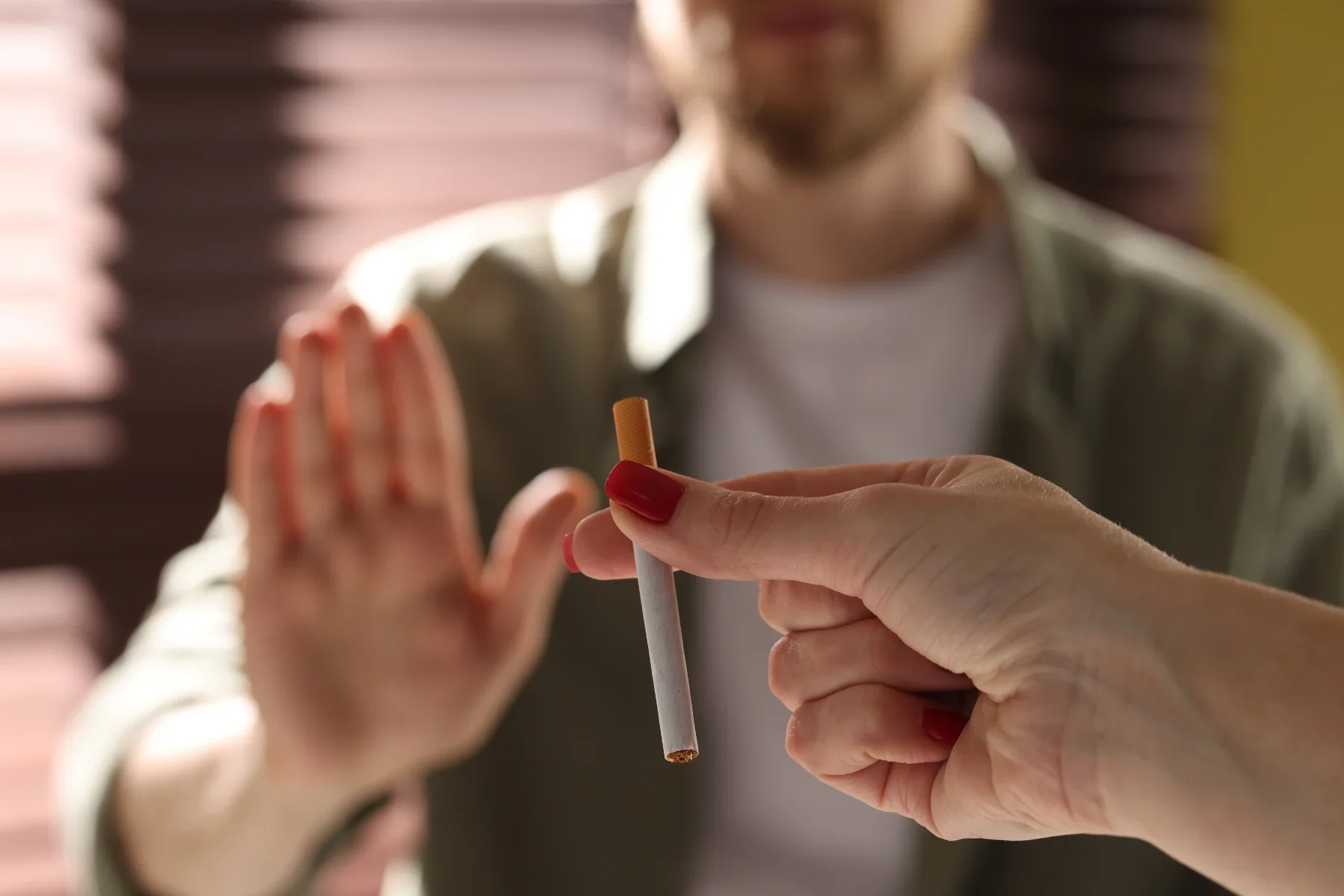
By Shoaib Memon, MD | Psychiatrist & Psychotherapist
"I quit. So why do I feel worse?"
Picture a man in his fifties who has smoked a pack a day for thirty years. He starts Chantix (varenicline), sets a quit date, and it works. Three weeks later he is smoke-free, and his family is thrilled.
But he isn't. He feels flat, irritable and low. Food tastes better, yet nothing feels rewarding. He wakes at 3 a.m. with his mind racing. He asks the obvious question: is the medication doing this to me, or is it the quitting?
The honest answer is that it could be either, and often it is mostly the quitting. That surprises people. We expect recovery from an addiction to feel like relief. For many people, the first weeks or months feel more like loss.
This post uses his story as a starting point, but the lesson reaches well beyond cigarettes. Whether someone stops smoking, drinking, using opioids or another drug, feeling anxious or depressed afterward is common, it has understandable causes, and for most people it passes.
Is it the Chantix or the quitting?
The best evidence says that for most people, low mood after quitting comes mainly from nicotine withdrawal, not from varenicline itself. But the drug can't be ruled out in any one person, so new or worsening mood symptoms always deserve a call to the prescriber.
Chantix carried an FDA boxed warning about mood changes, depression and suicidal thoughts from 2009, based on post-marketing reports. To test this properly, the FDA required a large trial called EAGLES. It enrolled 8,144 adult smokers, about half with a past or current stable psychiatric diagnosis, and randomized them to varenicline, bupropion, nicotine patch or placebo (Anthenelli et al., Lancet 2016).
| Group in EAGLES | Varenicline | Bupropion | Nicotine patch | Placebo |
|---|---|---|---|---|
| Psychiatric cohort: moderate-to-severe neuropsychiatric events | 6.5% | 6.7% | 5.2% | 4.9% |
| Whole trial: neuropsychiatric events | 4.0% | 4.5% | 3.9% | 3.7% |
The differences between groups were not statistically significant. Two findings matter most for our patient:
People on placebo had mood problems too. Some depression and anxiety showed up in every arm, including the sugar pill. That points to quitting itself as a common cause.
History matters more than the drug. People with a psychiatric history had roughly three times the rate of events (about 6% vs 2%), whatever they took (MDedge summary).
Based on EAGLES, the FDA removed the boxed warning in December 2016 (Pharmacy Times). The label still lists mood changes, including depression, among reported side effects, and the FDA noted the risk is higher in people already being treated for mental illness (Consultant360). EAGLES also excluded people with unstable psychiatric illness and was too small to detect very rare reactions.
Clues that can help sort it out (with a clinician, not alone):
Timing. Mood that dropped after the quit date and peaks in the first few weeks fits withdrawal. Mood that changed during the first week on the pill, before quitting, points more toward the medication.
Shape. Withdrawal mood often comes with craving, irritability, restlessness, poor sleep and hunger. Unusual agitation, hostility or strange thoughts are less typical of withdrawal.
History. A past episode of depression raises the odds that quitting will bring it back, with or without Chantix.
If there are any thoughts of suicide, or behavior that feels out of character, the label's advice is to stop the medication and contact a clinician right away.
The body's side: a brain recalibrating
Addictive substances don't just add pleasure. Over time the brain adjusts to their constant presence, and when the substance is removed, those adjustments are left uncovered. Low mood and anxiety are often the sound of the brain rebalancing.
1. Withdrawal includes low mood by definition
Depressed mood, anxiety, irritability, insomnia, restlessness and trouble concentrating are all formal symptoms of nicotine withdrawal. They tend to peak in the first days after quitting and fade over two to four weeks, though cravings can linger much longer (Hughes, cited in UC tobacco curriculum). A 2020 meta-analysis of 28 studies confirmed significant rises in anxiety, irritability and depressed mood during early abstinence (Conti et al., Neurosci Biobehav Rev).
A twin study found that these symptoms track with how dependent someone is, rather than with a pre-existing mental health condition. In other words, they are best seen as part of the withdrawal syndrome itself (co-twin study, PMC).
2. The receptors take weeks to reset
Heavy smokers grow extra nicotine receptors in the brain. Brain imaging at Yale showed these receptors stayed elevated through the first month of quitting and only returned to non-smoker levels after about 6 to 12 weeks (Cosgrove et al., Arch Gen Psychiatry 2009). Until then, a brain wired to expect nicotine runs short on stimulation. NIDA researchers linked the resulting dip in dopamine signaling to the lethargy and moodiness people feel (NIDA Notes).
This is also why our patient's "nothing feels rewarding" is so common. The technical term is anhedonia.
3. The "dark side" of addiction: less reward, more stress
Neuroscientist George Koob's work describes addiction as a cycle that moves from chasing pleasure to escaping distress. With repeated use, the brain's reward system turns down, and its stress systems, such as corticotropin-releasing factor (CRF) and dynorphin, turn up (Koob, Front Psychiatry 2013).
When the drug stops, the person is left with a low reward set point and an overactive stress response. Koob's group argues these stress systems become sensitized with repeated withdrawal and can persist into long-term abstinence (Koob & colleagues, Addiction as a stress surfeit disorder). This pattern holds across nicotine, alcohol, opioids and stimulants.
4. Protracted ("post-acute") withdrawal
For some substances, a quieter second wave can last for months. A systematic review of post-acute alcohol withdrawal found it is dominated by negative mood, emerges in early abstinence, and can persist 4 to 6 months or longer (Bahji et al., J Stud Alcohol Drugs 2022).
| Symptom after stopping alcohol | Typical course |
|---|---|
| Anhedonia | Worst in the first 30 days |
| Cravings | Worst in the first 3 weeks |
| Mood and anxiety symptoms | Mostly the first 3 to 4 months, occasionally longer |
| Insomnia | Can last up to about 6 months |
Source: Bahji et al. 2022. Similar lingering low mood, poor sleep and craving are described after stopping opioids and benzodiazepines, though the research there is thinner.
5. Sleep gets worse before it gets better
Insomnia is a recognized nicotine withdrawal symptom, and poor sleep both worsens mood and predicts relapse (Jaehne et al., Sleep Med Rev 2009). Varenicline itself commonly causes vivid dreams and insomnia, so in our patient, sleep is one place where drug and withdrawal effects overlap.
6. The substance may have been masking something
Some people were, without knowing it, using a substance to treat their own depression or anxiety. Nicotine has measurable mood-lifting effects in depressed non-smokers (Jaehne et al.). Remove it, and an underlying condition can resurface.
The classic study here followed 100 smokers with a past history of major depression, on average seven years earlier. Among those who quit, 31% developed a new major depressive episode, compared with 6% of those who kept smoking. New episodes were as common three to six months after quitting as in the first weeks (Glassman et al., Lancet 2001, summarized in AFP). Other studies have found depression history, not smoking status, was the main predictor (PMC review). Either way, a personal history of depression is the single biggest warning sign.
The mind's side: losing a tool, a friend and a self
Even when the chemistry settles, quitting changes how a person copes, what they look forward to and who they think they are. Each of those changes can feel like a loss.
The coping tool is gone, but the stress isn't
Many people say a cigarette or a drink calms them down. Psychologist Andy Parrott's "stress induction" model offers a different reading: dependent smokers drift into mild withdrawal between cigarettes, and each cigarette mostly relieves that withdrawal. This explains a paradox: smokers say smoking relaxes them, yet they report more stress than non-smokers (daily-diary study of smoking and stress, PMC).
Parrott also noted that using a substance to manage stress can leave the underlying problem untouched (PMC). After quitting, those problems are still there, a difficult job, a strained marriage, old grief. Now they arrive without the old buffer, and before new coping skills have been built. Feeling more exposed is an expected stage, not a sign that quitting was a mistake.
It can feel like grief
For many people the substance worked like a relationship. It was there in the morning, after meals, in hard moments and good ones. In one qualitative study of people in early recovery, every participant described their bond with the drug as a relationship and reported physical, emotional and relational reactions to losing it that resembled grief after a death (Haralson, Colorado State University).
Naming this as grief helps. People expect grief to come in waves and to ease with time, and they give themselves permission to feel it.
Who am I without it?
Quitting asks a person to give up an identity as well as a habit. In a survey of 357 ex-smokers in England, residual attraction to smoking and a lingering "smoker identity" faded with time. Still, after two or more years, 37% reported some residual attraction and 16% still saw themselves as a smoker (Vangeli & West).
Identity matters for staying quit. Research from the UK and the Netherlands found that taking on a non-smoker or "quitter" identity predicted better long-term abstinence (Tombor et al., PMC; Meijer et al., UCL). The in-between stage, no longer a user but not yet at home as a non-user, can feel unsettled and lonely.
Expectations set people up to feel let down
People often expect quitting to bring relief. When the first weeks instead bring irritability, flatness and fatigue, they may conclude that something is wrong with them, or that they were better off using. That interpretation, more than the symptoms themselves, can deepen low mood. Knowing in advance that a dip is normal and temporary is one of the simplest protective steps.
The social side: rituals, people and places
Substances are woven into social life, so quitting can quietly shrink a person's world for a while.
Lost rituals. The smoke break with coworkers, the drink after work, the friend you only ever saw at the bar. Quitting removes the excuse to step away, the shared pause and sometimes the people. What is left is often an empty slot in the day that nothing yet fills.
Social networks pull both ways. The Framingham Heart Study followed 12,067 people from 1971 to 2003 and found that smokers and non-smokers clustered together, and that people tended to quit in groups. When a spouse quit, a person's chance of smoking fell by 67%; a friend quitting lowered it by 36% (Christakis & Fowler, NEJM 2008). The flip side: someone who quits while everyone around them keeps using can feel out of step with their own circle.
For alcohol and drugs, the stakes are higher. Research on alcohol treatment shows that a social network that supports drinking predicts worse outcomes, while one that supports sobriety predicts more abstinence (Litt et al., PMC). A randomized trial found that a treatment focused on adding sober people to a person's network increased support for abstinence, which in turn tracked with better drinking outcomes (Litt et al., Network Support Project). But in the gap between leaving old friends and finding new ones, loneliness is common, and loneliness feeds both depression and relapse.
The good news. In the large 2021 Cochrane review, quitting smoking was not linked to any drop in social quality of life (BMJ news summary). The social disruption is real, but it tends to be temporary.
The part to hold on to: it usually gets better
The dip is real, but on average people who stay quit end up with better mental health than they had while using.
A 2014 BMJ meta-analysis of 26 studies compared people who quit smoking with those who kept smoking, measuring mood before quitting and from 7 weeks to 9 years later. Quitters had less depression, anxiety and stress and more positive mood and quality of life. The benefit was similar in people with psychiatric disorders (Taylor et al., BMJ 2014).
A 2021 Cochrane review expanded this to 102 studies and more than 169,500 people. People who stayed quit for at least 6 weeks did better than continuing smokers on every mental health measure (Taylor et al., Cochrane 2021, via HealthDay):
| Outcome | Change in quitters vs continuing smokers (standardized mean difference) |
|---|---|
| Mixed anxiety and depression | 0.31 lower |
| Depression symptoms | 0.30 lower |
| Anxiety symptoms | 0.28 lower |
| Positive mood | 0.22 higher |
| Stress | 0.19 lower |
| Psychological quality of life | 0.11 higher |
Quitters were also less likely to develop a new anxiety disorder (odds ratio 0.61). The authors noted these improvements are similar in size to those reported for antidepressants (Cochrane podcast). The evidence is observational, so the exact size is uncertain, but the direction is consistent.
Alcohol and other drugs follow a slower but similar arc: protracted mood, sleep and craving symptoms tend to fade over months (Bahji et al. 2022). For our patient, the realistic message is: the next 6 to 12 weeks may be hard, and on the other side most people feel better than they did before.
What helps
Feeling worse after quitting is common and usually temporary, but it should be treated, not just endured. Low mood early in a quit attempt is one of the strongest predictors of relapse (PMC review).
Expect the dip. Knowing that weeks 1 to 4 are often the hardest, and that brain receptors take 6 to 12 weeks to reset, turns a frightening feeling into an expected one.
Tell the prescriber. For someone on Chantix, new or worsening mood is worth a call. The clinician can weigh timing, dose and history, and may adjust treatment or add support.
Screen for depression history. Anyone who has had depression before should plan for closer follow-up for at least six months after quitting, since recurrences can appear months later.
Treat mood and addiction together. Studies in depressed smokers support treating both at the same time rather than putting off quitting until mood improves (PMC). Adding mood-focused coping skills or counseling to a quit plan is a reasonable step. Group therapy is a particularly useful modality to deal with the intersection of recovery and mood.
Protect sleep. Regular sleep and wake times, less caffeine late in the day (caffeine levels can rise after quitting smoking), and asking about vivid dreams if on varenicline.
Replace the ritual, not just the substance. A walk instead of a smoke break, a new after-work routine, exercise. Exercise also eases withdrawal symptoms.
Rebuild the social circle. Quit lines, support groups, AA or SMART Recovery, or simply a friend who doesn't use. Adding even one supportive, non-using person helps.
Allow the grief. Missing the substance doesn't mean you made the wrong choice.
Get help right away for thoughts of suicide or self-harm, hopelessness that doesn't lift, inability to function at work or home, or agitation and behavior that feel unlike yourself. If you are on Chantix, contact your prescriber about stopping it.
Disclaimer: This post is for educational purposes only and does not constitute medical advice. It is not a substitute for professional diagnosis or treatment. Talk with a qualified healthcare provider about your own situation, and don't start, stop or change any medication without their guidance.
References
Anthenelli RM, Benowitz NL, West R, et al. Neuropsychiatric safety and efficacy of varenicline, bupropion, and nicotine patch in smokers with and without psychiatric disorders (EAGLES). Lancet. 2016;387:2507–20. Summary
Conti AA, et al. Severity of negative mood and anxiety symptoms occurring during acute abstinence from tobacco: a systematic review and meta-analysis. Neurosci Biobehav Rev. 2020. Author manuscript
Cosgrove KP, et al. β2-nicotinic acetylcholine receptor availability during acute and prolonged abstinence from tobacco smoking. Arch Gen Psychiatry. 2009;66:666–76. PMC2796827
Koob GF. Addiction is a reward deficit and stress surfeit disorder. Front Psychiatry. 2013;4:72. DOAJ
Bahji A, et al. Neurobiology and symptomatology of post-acute alcohol withdrawal: a mixed-studies systematic review. J Stud Alcohol Drugs. 2022. PMC9798382
Jaehne A, et al. Effects of nicotine on sleep during consumption, withdrawal and replacement therapy. Sleep Med Rev. 2009;13:363–77. Abstract
Glassman AH, et al. Smoking cessation and the course of major depression: a follow-up study. Lancet. 2001;357:1929–32. AFP summary
Parrott AC. Does cigarette smoking cause stress? Am Psychol. 1999;54:817–20. Discussed in PMC2873683 and PMC3888179
Christakis NA, Fowler JH. The collective dynamics of smoking in a large social network. N Engl J Med. 2008;358:2249–58. Harvard DASH
Taylor GMJ, et al. Smoking cessation for improving mental health. Cochrane Database Syst Rev. 2021;3:CD013522. BMJ news · Results summary